Lifecycle Phases
Tapestry's most distinctive feature is its strict phase-based lifecycle model. Every operation in Tapestry happens during a specific phase, and the framework enforces these boundaries with fail-fast checks. This guide provides detailed documentation of each phase, what operations are allowed, and why the phase model matters.
Why Phases Matter
Traditional modding frameworks allow mods to run code at any time, leading to several critical problems:
- Race conditions: Mods interfere with each other based on load order
- Unpredictable initialization: No guarantees about when things are ready
- Hard-to-debug timing issues: Bugs appear only with specific mod combinations
- Fragile load order dependencies: Changing load order breaks mods
Tapestry solves these problems by dividing the boot sequence into discrete phases with clear contracts. Each phase has:
- Specific responsibilities: What the framework does during this phase
- Allowed operations: What mods and extensions can do
- Forbidden operations: What will throw errors if attempted
- Guarantees: What you can rely on after this phase completes
💡 Core Principle: If the framework ever does not know what phase it is in, it is already broken.
Phase Progression
Tapestry progresses through phases in strict order. Phases cannot be skipped, and the framework cannot move backward. Each phase completes fully before the next begins.
BOOTSTRAP → DISCOVERY → VALIDATION → REGISTRATION → FREEZE →
TS_LOAD → TS_REGISTER → TS_ACTIVATE → TS_READY →
PERSISTENCE_READY → EVENT → RUNTIME → CLIENT_PRESENTATION_READY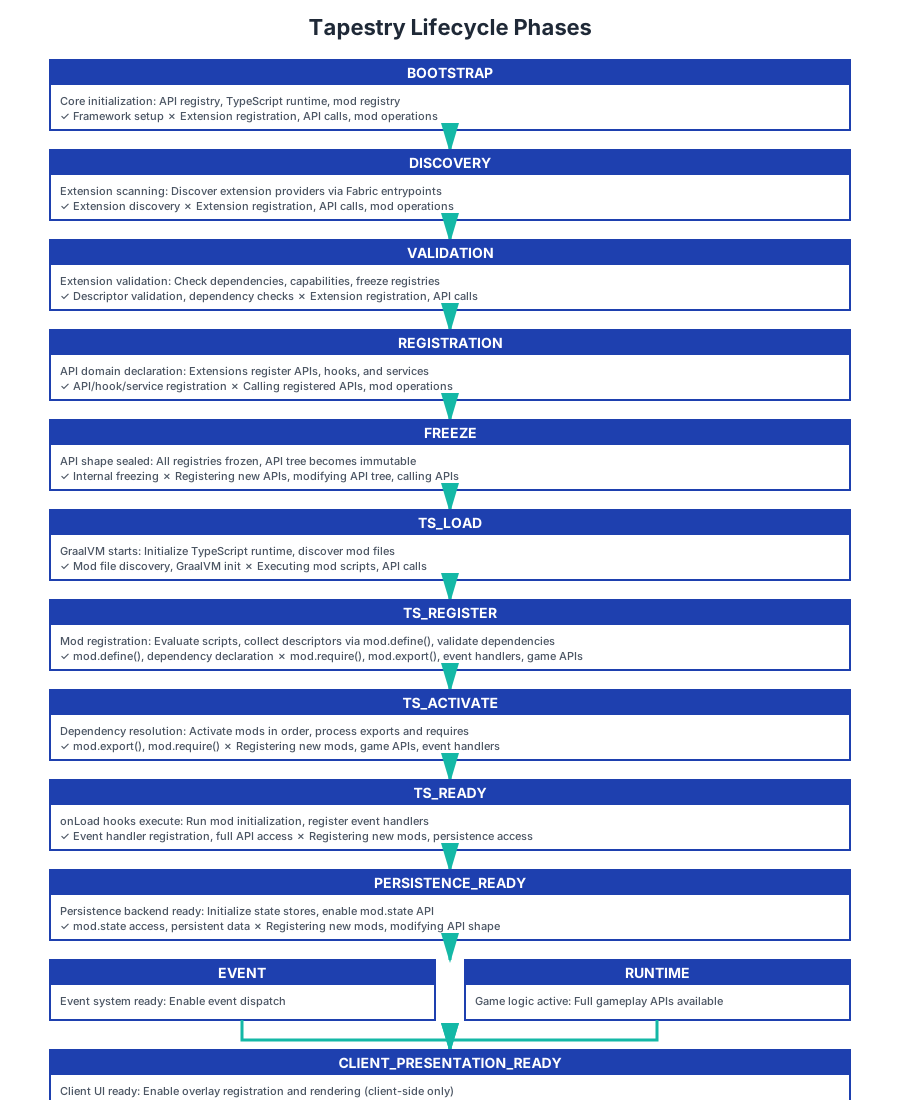 Figure 1: Tapestry's lifecycle phase progression showing the strict sequential flow from BOOTSTRAP through CLIENT_PRESENTATION_READY, with each phase having specific responsibilities and allowed operations.
Phase Reference
BOOTSTRAP
Purpose: Core initialization
What Happens:
- Instantiate core fields (API registry, TypeScript runtime, mod registry)
- Set up basic infrastructure
- Initialize phase controller
Allowed Operations:
- Internal framework initialization only
Forbidden Operations:
- Extension registration
- API calls
- Mod operations
Guarantees After This Phase:
- Core framework objects exist
- Phase controller is operational
- Ready to discover extensions
DISCOVERY
Purpose: Extension scanning
What Happens:
- Register Fabric lifecycle hooks
- Discover extension providers via Fabric entrypoints
- Collect extension descriptors
Allowed Operations:
- Extension providers can be discovered
- Extension descriptors can be created
Forbidden Operations:
- Extension registration (happens in REGISTRATION phase)
- API calls
- Mod operations
Guarantees After This Phase:
- All extensions have been discovered
- Extension descriptors are available
- Ready for validation
Example:
// Extension provider discovered during DISCOVERY
public class MyExtension implements TapestryExtensionProvider {
    @Override
    public TapestryExtensionDescriptor describe() {
        return new TapestryExtensionDescriptor(
            "myext",
            List.of("rpc", "events")
        );
    }
}
VALIDATION
Purpose: Extension validation
What Happens:
- Validate extension descriptors
- Check dependencies and capabilities
- Freeze capability and type registries
- Ensure no duplicate extension IDs
Allowed Operations:
- Extension descriptor validation
- Dependency checking
Forbidden Operations:
- Extension registration
- API calls
- Mod operations
Guarantees After This Phase:
- All extensions are valid
- No duplicate extension IDs
- Dependencies are satisfied
- Capability registry is frozen
- Ready for registration
REGISTRATION
Purpose: API domain declaration
What Happens:
- Extensions register their APIs, hooks, and services
- Build extension registries
- Populate API tree with extension-provided functions
Allowed Operations:
- Extensions can register API endpoints
- Extensions can register hooks
- Extensions can register services
Forbidden Operations:
- Modifying frozen registries
- Calling registered APIs
- Mod operations
Guarantees After This Phase:
- All extension APIs are registered
- API tree is populated
- Ready to freeze API shape
Example:
// Extension registers API during REGISTRATION
@Override
public void register(TapestryExtensionContext ctx) {
    ctx.registerRpcEndpoint("myapi", (ctx, data) -> {
        return JsonValue.of("pong");
    });
}
FREEZE
Purpose: API shape is sealed
What Happens:
- Freeze all registries (API, hook, service)
- Make API tree immutable
- Lock down extension capabilities
Allowed Operations:
- Internal freezing operations only
Forbidden Operations:
- Registering new APIs
- Modifying API tree
- Calling APIs (not yet available to mods)
Guarantees After This Phase:
- API shape is permanently sealed
- No more APIs can be added or removed
- API tree is immutable
- Mods can safely cache API references
- Ready to initialize TypeScript runtime
⚠️ Critical: After FREEZE, the API cannot be modified. This guarantee enables deterministic dependency resolution.
TS_LOAD
Purpose: GraalVM starts, scripts loaded
What Happens:
- Initialize TypeScript runtime for mod loading
- Create GraalVM JavaScript context
- Discover TypeScript mod files from filesystem and classpath
- Inject
tapestrynamespace (but not yet fully populated)
Allowed Operations:
- Mod file discovery
- GraalVM context initialization
Forbidden Operations:
- Executing mod scripts (happens in TS_REGISTER)
- Calling APIs
- Mod registration
Guarantees After This Phase:
- TypeScript runtime is initialized
- All mod files have been discovered
- GraalVM context is ready
- Ready to register mods
TS_REGISTER
Purpose: Mod registration and metadata collection
What Happens:
- Evaluate mod scripts in GraalVM context
- Collect mod descriptors via
tapestry.mod.define()calls - Validate mod dependencies
- Build activation order based on dependency graph
Allowed Operations:
- Mods can call
tapestry.mod.define()to register - Mods can declare dependencies
- Mods can declare exports
Forbidden Operations:
- Calling
tapestry.mod.require()(happens in TS_ACTIVATE) - Calling
tapestry.mod.export()(happens in TS_ACTIVATE) - Registering event handlers
- Calling game APIs
Guarantees After This Phase:
- All mods are registered
- Mod metadata is collected
- Dependency graph is validated
- Activation order is determined
- Ready to activate mods
Example:
// Mod registers during TS_REGISTER
tapestry.mod.define({
  id: "my-mod",
  version: "1.0.0",
  depends: ["core-lib"],

  onLoad(api) {
    // This doesn't run yet - just stored for TS_READY
    console.log("Mod loaded!");
  }
});
TS_ACTIVATE
Purpose: Dependency resolution
What Happens:
- Activate mods in dependency order
- Process
tapestry.mod.export()calls - Process
tapestry.mod.require()calls - Resolve inter-mod dependencies
Allowed Operations:
- Mods can call
tapestry.mod.export()to expose values - Mods can call
tapestry.mod.require()to import from dependencies
Forbidden Operations:
- Registering new mods
- Calling game APIs
- Registering event handlers
Guarantees After This Phase:
- All mods are activated in dependency order
- All exports are available
- All requires are resolved
- Ready to execute mod onLoad hooks
Example:
// Mod A exports during TS_ACTIVATE
tapestry.mod.export("utilityFunction", (x) => x * 2);

// Mod B requires during TS_ACTIVATE (after Mod A)
const util = tapestry.mod.require("mod-a", "utilityFunction");
console.log(util(5)); // 10
TS_READY
Purpose: onLoad hooks execute
What Happens:
- Execute all mod
onLoadhandlers in dependency order - Allow hook registration
- Populate
tapestrynamespace with full API
Allowed Operations:
- Mods can register event handlers
- Mods can access the full API
- Mods can set up initial state
Forbidden Operations:
- Registering new mods
- Modifying API shape
- Accessing persistence (not ready yet)
Guarantees After This Phase:
- All mod
onLoadhooks have executed - All event handlers are registered
- Mods are fully initialized
- Ready for persistence initialization
Example:
tapestry.mod.define({
  id: "my-mod",

  onLoad(api) {
    // This runs during TS_READY
    console.log("Mod is ready!");

    // Can register event handlers
    api.events.on('tick', () => {
      // Per-tick logic
    });
  }
});
PERSISTENCE_READY
Purpose: Persistence backend ready
What Happens:
- Initialize persistence service
- Enable per-mod state stores
- Connect to storage backend
Allowed Operations:
- Mods can access
tapestry.mod.stateAPI - Mods can read and write persistent data
Forbidden Operations:
- Modifying API shape
- Registering new mods
Guarantees After This Phase:
- Persistence backend is initialized
- Mod state stores are available
- Data can be persisted to disk
- Ready for event system initialization
Example:
// After PERSISTENCE_READY, mods can use state API
tapestry.mod.state.set("playerScore", 100);
const score = tapestry.mod.state.get("playerScore");
EVENT
Purpose: Event system ready
What Happens:
- Extend runtime with event APIs
- Initialize event bus
- Enable event dispatch
Allowed Operations:
- Mods can emit events
- Mods can listen to events
Forbidden Operations:
- Modifying API shape
- Registering new mods
Guarantees After This Phase:
- Event system is fully operational
- Events can be emitted and received
- Ready for runtime initialization
RUNTIME
Purpose: Game logic and events active
What Happens:
- Initialize runtime services (scheduler, event bus, config, state)
- Extend runtime with gameplay APIs (players, RPC, etc.)
- Connect to Minecraft server lifecycle events
Allowed Operations:
- Mods can interact with game world
- Mods can use RPC system
- Mods can access player data
- Mods can schedule tasks
Forbidden Operations:
- Modifying API shape
- Registering new mods
- Registering overlays (client only, happens in CLIENT_PRESENTATION_READY)
Guarantees After This Phase:
- Full game API is available
- RPC system is operational
- Scheduler is running
- Server lifecycle events are connected
- Ready for client presentation (if on client)
Example:
// During RUNTIME, full game API is available
tapestry.mod.define({
  onLoad(api) {
    api.events.on('playerJoin', (player) => {
      console.log(`${player.name} joined the game`);
    });

    // Schedule a task
    api.scheduler.runLater(() => {
      console.log("5 seconds later...");
    }, 100); // 100 ticks = 5 seconds
  }
});
CLIENT_PRESENTATION_READY
Purpose: Client UI ready (client-side only)
What Happens:
- Extend runtime with client presentation APIs
- Enable overlay registration
- Initialize overlay renderer
Allowed Operations:
- Mods can register UI overlays
- Mods can render custom UI elements
Forbidden Operations:
- Modifying API shape
- Registering new mods
Guarantees After This Phase:
- Client presentation API is available
- Overlays can be registered and rendered
- Full client-side functionality is operational
Example:
// Register overlay during CLIENT_PRESENTATION_READY
if (tapestry.isClient) {
  tapestry.mod.define({
    onLoad(api) {
      api.overlay.register({
        id: "my-hud",
        anchor: "top-left",
        render: (ctx) => {
          ctx.drawText("Hello, world!", 10, 10);
        }
      });
    }
  });
}
Phase Guards
Tapestry provides phase guard functions to enforce phase requirements:
requirePhase(phase)
Requires the current phase to be exactly the specified phase.
PhaseController.requirePhase(TapestryPhase.REGISTRATION);
// Throws if not in REGISTRATION phase
requireAtLeast(phase)
Requires the current phase to be at least the specified phase (or later).
PhaseController.requireAtLeast(TapestryPhase.TS_READY);
// Throws if before TS_READY
requireAtMost(phase)
Requires the current phase to be at most the specified phase (or earlier).
PhaseController.requireAtMost(TapestryPhase.FREEZE);
// Throws if after FREEZE
Common Phase Errors
"Cannot register API after FREEZE"
Cause: Attempting to register an API endpoint after the FREEZE phase has completed.
Solution: Move API registration to the REGISTRATION phase in your extension's register() method.
"API not available in current phase"
Cause: Attempting to call an API before it's available (usually before TS_READY).
Solution: Move API calls into your mod's onLoad() hook, which runs during TS_READY.
"Cannot register mod after TS_REGISTER"
Cause: Attempting to call tapestry.mod.define() after the TS_REGISTER phase.
Solution: Ensure your mod script is discovered during TS_LOAD and evaluated during TS_REGISTER. Don't try to register mods dynamically at runtime.
"Persistence not ready"
Cause: Attempting to access tapestry.mod.state before PERSISTENCE_READY phase.
Solution: Wait until the persistence system is initialized. Use event handlers that run during RUNTIME or later.
Phase Timing Diagram
Time →

BOOTSTRAP ────────┐
                  │ Framework initialization
DISCOVERY ────────┤
                  │ Extension discovery
VALIDATION ───────┤
                  │ Extension validation
REGISTRATION ─────┤
                  │ API registration
FREEZE ───────────┤
                  │ API sealed
TS_LOAD ──────────┤
                  │ TypeScript runtime init
TS_REGISTER ──────┤
                  │ Mod registration
TS_ACTIVATE ──────┤
                  │ Dependency resolution
TS_READY ─────────┤
                  │ Mod onLoad hooks
PERSISTENCE_READY ┤
                  │ State stores ready
EVENT ────────────┤
                  │ Event system ready
RUNTIME ──────────┤
                  │ Game logic active
CLIENT_PRESENTATION_READY
                  │ UI overlays ready
                  ▼
Best Practices
1. Respect Phase Boundaries
Don't try to work around phase restrictions. They exist to prevent bugs.
// ✓ Good: Register handlers during TS_READY
tapestry.mod.define({
  onLoad(api) {
    api.events.on('tick', handler);
  }
});

// ✗ Bad: Try to register handlers later
setTimeout(() => {
  api.events.on('tick', handler); // Throws error!
}, 5000);
2. Use Phase-Appropriate APIs
Different APIs become available at different phases. Check the API documentation for phase requirements.
// ✓ Good: Use state API after PERSISTENCE_READY
tapestry.mod.define({
  onLoad(api) {
    api.events.on('serverStarted', () => {
      // Persistence is ready by now
      const score = tapestry.mod.state.get("score");
    });
  }
});
3. Declare Dependencies Correctly
Mod dependencies are validated during TS_REGISTER. Declare all dependencies upfront.
// ✓ Good: Declare dependencies
tapestry.mod.define({
  id: "my-mod",
  depends: ["core-lib", "utility-mod"],

  onLoad(api) {
    const lib = tapestry.mod.require("core-lib", "helper");
  }
});
4. Handle Client/Server Differences
Some phases only apply to specific sides. Use tapestry.isClient and tapestry.isServer to detect the environment.
tapestry.mod.define({
  onLoad(api) {
    if (tapestry.isClient) {
      // CLIENT_PRESENTATION_READY phase applies here
      api.overlay.register({ /* ... */ });
    }

    if (tapestry.isServer) {
      // Server-specific logic
      api.events.on('playerJoin', handler);
    }
  }
});
Next Steps
Now that you understand Tapestry's lifecycle phases:
- Learn about Extension System to create Java extensions
- Review Architecture for system design details
- Explore the API Reference for phase-specific API documentation
- Read Core Concepts for the philosophy behind phases
Key Takeaways
- Phases are strict - No skipping, no going backward, fail-fast enforcement
- Each phase has a contract - Specific allowed and forbidden operations
- API freeze is permanent - After FREEZE, the API shape never changes
- Mods load in order - TS_REGISTER → TS_ACTIVATE → TS_READY
- Phase guards prevent bugs - Illegal operations fail immediately with clear errors
- Respect the boundaries - Don't try to work around phase restrictions