
Extension System
Tapestry's extension system allows you to add new capabilities to the framework through Java components. Extensions are discovered during the DISCOVERY phase, validated during VALIDATION, and registered during the REGISTRATION phase. This guide explains how to build extensions that integrate seamlessly with Tapestry's lifecycle model.
What Are Extensions?
Extensions are Java components that extend Tapestry's functionality by:
- Adding new APIs - Expose Java functionality to TypeScript mods
- Registering hooks - Allow mods to respond to game events
- Providing services - Offer Java services to other extensions
- Exporting types - Share TypeScript type definitions with mods
Extensions follow an additive-only model: they can only add capabilities, never remove or modify existing ones. This ensures that mods can safely depend on the API shape remaining stable after the FREEZE phase.
Creating an Extension
Step 1: Implement TapestryExtensionProvider
Create a class that implements the TapestryExtensionProvider interface:
package com.example.myextension;

import com.tapestry.extensions.*;
import java.util.List;
import java.util.Optional;

public class MyExtensionProvider implements TapestryExtensionProvider {

    @Override
    public TapestryExtensionDescriptor describe() {
        return new TapestryExtensionDescriptor(
            "my_extension",              // Unique ID (snake_case)
            "My Extension",              // Display name
            "1.0.0",                     // Extension version
            "0.1.0",                     // Minimum Tapestry version
            List.of(                     // Capabilities this extension provides
                new CapabilityDecl(
                    "my_extension.greet",
                    CapabilityType.API,
                    false,
                    Map.of(),
                    "tapestry.mods.my_extension.greet"
                )
            ),
            List.of(),                   // Required extension dependencies
            List.of(),                   // Required capabilities
            Optional.empty(),            // Type export entry (optional)
            List.of()                    // Type imports (optional)
        );
    }

    @Override
    public TapestryExtension create() {
        return new MyExtensionInstance();
    }
}
Step 2: Implement TapestryExtension
Create the extension instance that performs the actual registration:
package com.example.myextension;

import com.tapestry.extensions.*;
import com.tapestry.runtime.ProxyExecutable;

public class MyExtensionInstance implements TapestryExtension {

    @Override
    public void register(TapestryExtensionContext ctx) {
        // Register API function
        ctx.api().addFunction(
            ctx.extensionId(),
            "my_extension.greet",
            new ProxyExecutable() {
                @Override
                public Object execute(Object... args) {
                    String name = (String) args[0];
                    return "Hello, " + name + "!";
                }
            }
        );

        ctx.log().info("My Extension registered successfully");
    }

    @Override
    public void onFreeze() {
        // Optional: Perform any finalization before API freeze
    }
}
Step 3: Register with Fabric
Add your extension provider to fabric.mod.json:
{
  "entrypoints": {
    "tapestry:extension": [
      "com.example.myextension.MyExtensionProvider"
    ]
  }
}
Tapestry will discover your extension during the DISCOVERY phase via Fabric's entrypoint system.
Extension Descriptor
The TapestryExtensionDescriptor defines your extension's metadata and capabilities:
Extension ID
The unique identifier for your extension. Must be:
- Lowercase with underscores (snake_case)
- Start with a letter
- Contain only letters, numbers, and underscores
"my_extension"  // ✓ Valid
"MyExtension"   // ✗ Invalid (uppercase)
"123_ext"       // ✗ Invalid (starts with number)
Display Name
Human-readable name shown in logs and error messages:
"My Extension"
"Infinite Dimensions"
"World Generation Plus"
Version Requirements
Specify your extension version and minimum Tapestry version:
"1.0.0",      // Extension version (semantic versioning)
"0.1.0"       // Minimum Tapestry version required
Tapestry validates version compatibility during the VALIDATION phase.
Capabilities
Capabilities define what your extension adds to Tapestry. Each capability has:
- name - Unique capability identifier (e.g.,
"my_extension.greet") - type - Capability type:
API,HOOK, orSERVICE - exclusive - Whether only one extension can provide this capability
- meta - Optional metadata map
- apiPath - For API capabilities: where the function appears in JavaScript
new CapabilityDecl(
    "my_extension.greet",           // Capability name
    CapabilityType.API,             // Type: API function
    false,                          // Not exclusive
    Map.of("category", "utility"),  // Optional metadata
    "tapestry.mods.my_extension.greet"  // JavaScript path
)
Dependencies
Declare dependencies on other extensions:
List.of("core_lib", "utility_ext") // Required extensionsTapestry validates that all dependencies are present and resolves the activation order during VALIDATION.
Capability Requirements
Declare required capabilities from other extensions:
List.of("persistence.state", "events.tick") // Required capabilitiesThis allows your extension to depend on specific features without depending on entire extensions.
Capability Types
API Capabilities
API capabilities expose Java functions to TypeScript mods:
new CapabilityDecl(
    "my_extension.calculate",
    CapabilityType.API,
    false,
    Map.of(),
    "tapestry.mods.my_extension.calculate"
)
Register the function during REGISTRATION:
@Override
public void register(TapestryExtensionContext ctx) {
    ctx.api().addFunction(
        ctx.extensionId(),
        "my_extension.calculate",
        new ProxyExecutable() {
            @Override
            public Object execute(Object... args) {
                int a = (int) args[0];
                int b = (int) args[1];
                return a + b;
            }
        }
    );
}
Mods can call this function after TS_READY:
tapestry.mod.define({
  onLoad(api) {
    const result = tapestry.mods.my_extension.calculate(5, 3);
    console.log(`Result: ${result}`); // Result: 8
  }
});
Hook Capabilities
Hook capabilities allow mods to respond to events:
new CapabilityDecl(
    "my_extension.onCustomEvent",
    CapabilityType.HOOK,
    false,
    Map.of("phase", "runtime"),
    null  // Hooks don't need apiPath
)
Register the hook bridge during REGISTRATION:
@Override
public void register(TapestryExtensionContext ctx) {
    ctx.hooks().registerBridge(
        ctx.extensionId(),
        "my_extension.onCustomEvent",
        (callback) -> {
            // Store callback and invoke it when event occurs
            eventCallbacks.add(callback);
        }
    );
}
Mods can register handlers:
tapestry.mod.define({
  onLoad(api) {
    api.hooks.on('my_extension.onCustomEvent', (data) => {
      console.log('Custom event fired:', data);
    });
  }
});
Service Capabilities
Service capabilities provide Java services to other extensions:
new CapabilityDecl(
    "my_extension.data_processor",
    CapabilityType.SERVICE,
    true,  // Exclusive: only one extension can provide this
    Map.of("interface", "com.example.DataProcessor"),
    null
)
Register the service during REGISTRATION:
@Override
public void register(TapestryExtensionContext ctx) {
    ctx.services().register(
        ctx.extensionId(),
        "my_extension.data_processor",
        new DataProcessorImpl()
    );
}
Other extensions can access the service:
DataProcessor processor = (DataProcessor) ctx.services()
    .get("my_extension.data_processor");
Extension Lifecycle
Extensions progress through several phases:
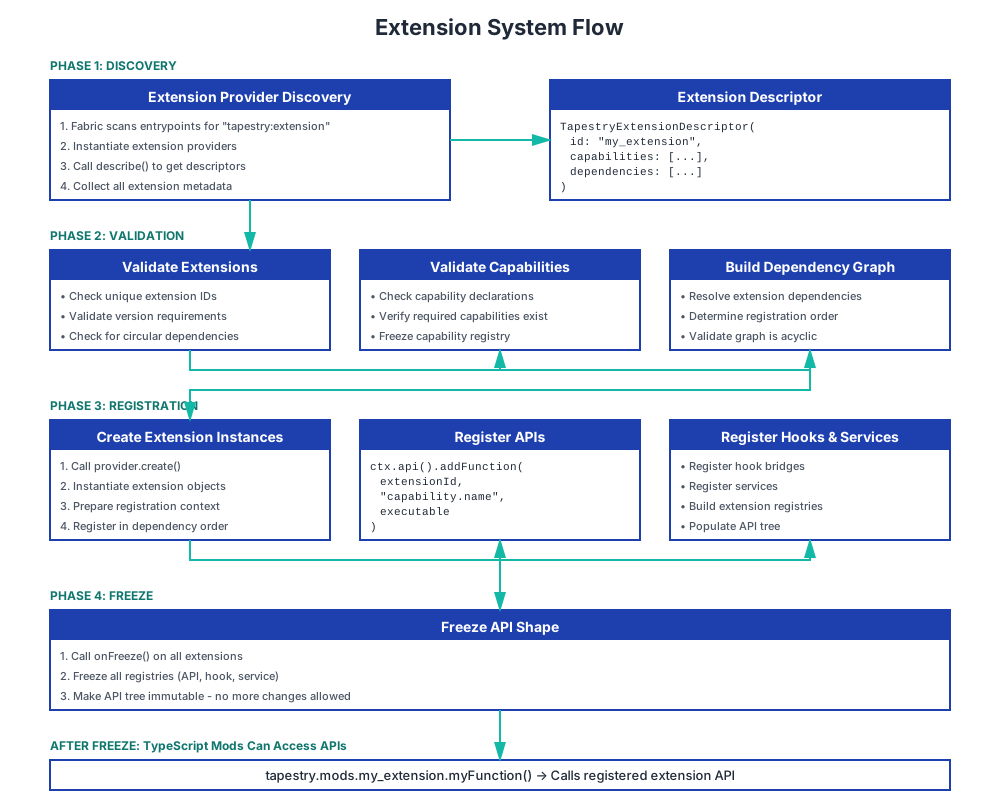 Figure 1: Extension system lifecycle flow showing the progression from DISCOVERY through FREEZE phases, including provider instantiation, descriptor validation, extension registration, and API freezing.
1. DISCOVERY Phase
Tapestry discovers extension providers via Fabric entrypoints:
// Your provider is instantiated
MyExtensionProvider provider = new MyExtensionProvider();

// describe() is called to get the descriptor
TapestryExtensionDescriptor descriptor = provider.describe();
Requirements:
describe()must be pure (no side effects)- Must return a valid descriptor
- Must not access game state or other extensions
2. VALIDATION Phase
Tapestry validates all extension descriptors:
- Checks extension IDs are unique and valid
- Validates version requirements
- Resolves dependency graph
- Checks for circular dependencies
- Validates capability declarations
- Ensures required capabilities are available
If validation fails, Tapestry throws an error with details about the problem.
3. REGISTRATION Phase
Tapestry calls create() to instantiate your extension, then calls register():
// Extension instance is created
TapestryExtension extension = provider.create();

// register() is called with context
extension.register(context);
During registration, you can:
- Register API functions via
ctx.api() - Register hook bridges via
ctx.hooks() - Register services via
ctx.services() - Access logger via
ctx.log()
You cannot:
- Call registered APIs (not available yet)
- Access game state (not initialized yet)
- Modify other extensions
4. FREEZE Phase
Tapestry calls onFreeze() on all extensions, then freezes all registries:
extension.onFreeze();After this phase:
- API shape is permanently sealed
- No more capabilities can be registered
- Mods can safely cache API references
Type Exports
Extensions can export TypeScript type definitions to provide type safety for mods:
Step 1: Create Type Definition File
Create a .d.ts file in your extension:
// my-extension.d.ts
declare namespace tapestry.mods.my_extension {
  /**
   * Greets a person by name
   * @param name - The person's name
   * @returns A greeting message
   */
  function greet(name: string): string;

  /**
   * Calculates the sum of two numbers
   * @param a - First number
   * @param b - Second number
   * @returns The sum
   */
  function calculate(a: number, b: number): number;
}
Step 2: Declare Type Export
Update your descriptor to export the type file:
new TapestryExtensionDescriptor(
    "my_extension",
    "My Extension",
    "1.0.0",
    "0.1.0",
    capabilities,
    List.of(),
    List.of(),
    Optional.of("my-extension.d.ts"),  // Type export entry
    List.of()
)
Step 3: Import Types in Other Extensions
Other extensions can import your types:
new TapestryExtensionDescriptor(
    "dependent_extension",
    "Dependent Extension",
    "1.0.0",
    "0.1.0",
    capabilities,
    List.of("my_extension"),           // Depends on my_extension
    List.of(),
    Optional.empty(),
    List.of("my_extension")            // Import types from my_extension
)
Mods using your extension will get full TypeScript type checking and autocomplete.
Best Practices
1. Keep describe() Pure
The describe() method must be pure with no side effects:
// ✓ Good: Pure descriptor
@Override
public TapestryExtensionDescriptor describe() {
    return new TapestryExtensionDescriptor(/* ... */);
}

// ✗ Bad: Side effects in describe()
@Override
public TapestryExtensionDescriptor describe() {
    initializeDatabase();  // Don't do this!
    return new TapestryExtensionDescriptor(/* ... */);
}
2. Use Semantic Versioning
Follow semantic versioning for your extension:
- Major (1.0.0 → 2.0.0): Breaking changes
- Minor (1.0.0 → 1.1.0): New features, backward compatible
- Patch (1.0.0 → 1.0.1): Bug fixes
3. Declare Dependencies Explicitly
Always declare dependencies on other extensions:
List.of("core_lib", "utility_ext") // Explicit dependenciesDon't rely on implicit load order or assume other extensions are present.
4. Use Exclusive Capabilities Sparingly
Only mark capabilities as exclusive when truly necessary:
new CapabilityDecl(
    "worldgen.dimension_provider",
    CapabilityType.SERVICE,
    true,  // Only one dimension provider allowed
    Map.of(),
    null
)
Exclusive capabilities prevent other extensions from providing the same capability.
5. Provide Type Definitions
Always export TypeScript type definitions for your APIs:
// Provides autocomplete and type checking for mods
declare namespace tapestry.mods.my_extension {
  function myFunction(arg: string): number;
}
6. Log Important Events
Use the provided logger to log registration and errors:
@Override
public void register(TapestryExtensionContext ctx) {
    ctx.log().info("Registering {} capabilities", capabilities.size());

    try {
        // Registration logic
        ctx.log().info("Registration complete");
    } catch (Exception e) {
        ctx.log().error("Registration failed", e);
        throw e;
    }
}
7. Validate Arguments
Validate arguments in your API functions:
new ProxyExecutable() {
    @Override
    public Object execute(Object... args) {
        if (args.length != 1) {
            throw new IllegalArgumentException(
                "Expected 1 argument, got " + args.length
            );
        }

        if (!(args[0] instanceof String)) {
            throw new IllegalArgumentException(
                "Expected string argument"
            );
        }

        String name = (String) args[0];
        return "Hello, " + name + "!";
    }
}
8. Handle Errors Gracefully
Provide clear error messages when operations fail:
@Override
public Object execute(Object... args) {
    try {
        return performOperation(args);
    } catch (IOException e) {
        throw new RuntimeException(
            "Failed to perform operation: " + e.getMessage(),
            e
        );
    }
}
Common Patterns
Stateful Extensions
Extensions can maintain state across registrations:
public class StatefulExtension implements TapestryExtension {
    private final Map<String, Object> cache = new ConcurrentHashMap<>();

    @Override
    public void register(TapestryExtensionContext ctx) {
        ctx.api().addFunction(
            ctx.extensionId(),
            "my_extension.cache_get",
            new ProxyExecutable() {
                @Override
                public Object execute(Object... args) {
                    String key = (String) args[0];
                    return cache.get(key);
                }
            }
        );

        ctx.api().addFunction(
            ctx.extensionId(),
            "my_extension.cache_set",
            new ProxyExecutable() {
                @Override
                public Object execute(Object... args) {
                    String key = (String) args[0];
                    Object value = args[1];
                    cache.put(key, value);
                    return null;
                }
            }
        );
    }
}
Event Broadcasting
Extensions can broadcast events to mods:
public class EventExtension implements TapestryExtension {
    private final List<Object> listeners = new ArrayList<>();

    @Override
    public void register(TapestryExtensionContext ctx) {
        // Register hook for mods to listen
        ctx.hooks().registerBridge(
            ctx.extensionId(),
            "my_extension.onEvent",
            (callback) -> {
                listeners.add(callback);
            }
        );

        // Register API to trigger event
        ctx.api().addFunction(
            ctx.extensionId(),
            "my_extension.triggerEvent",
            new ProxyExecutable() {
                @Override
                public Object execute(Object... args) {
                    Object data = args[0];
                    for (Object listener : listeners) {
                        // Invoke listener with data
                        ((ProxyExecutable) listener).execute(data);
                    }
                    return null;
                }
            }
        );
    }
}
Configuration Support
Extensions can load configuration from files:
public class ConfigurableExtension implements TapestryExtension {
    private final Path configPath;
    private JsonObject config;

    public ConfigurableExtension(Path configPath) {
        this.configPath = configPath;
    }

    @Override
    public void register(TapestryExtensionContext ctx) {
        // Load config during registration
        try {
            String json = Files.readString(configPath);
            config = JsonParser.parseString(json).getAsJsonObject();
            ctx.log().info("Loaded configuration from {}", configPath);
        } catch (IOException e) {
            ctx.log().warn("Failed to load config, using defaults", e);
            config = new JsonObject();
        }

        // Register API that uses config
        ctx.api().addFunction(
            ctx.extensionId(),
            "my_extension.getConfig",
            new ProxyExecutable() {
                @Override
                public Object execute(Object... args) {
                    String key = (String) args[0];
                    return config.get(key);
                }
            }
        );
    }
}
Troubleshooting
"Extension ID already registered"
Cause: Two extensions have the same ID.
Solution: Ensure your extension ID is unique. Check for conflicts with other mods.
"Required extension not found"
Cause: Your extension depends on another extension that isn't installed.
Solution: Ensure all dependencies are listed in your mod's dependencies and are installed.
"Capability already registered"
Cause: Two extensions try to register the same capability.
Solution:
- If the capability should be exclusive, mark it as such
- If not, use unique capability names for each extension
"Cannot register API after FREEZE"
Cause: Attempting to register an API after the FREEZE phase.
Solution: Move all registration logic to the register() method, which runs during REGISTRATION.
"Circular dependency detected"
Cause: Extension A depends on B, and B depends on A.
Solution: Refactor to remove circular dependencies. Consider extracting shared functionality to a third extension.
"Version requirement not met"
Cause: Your extension requires a newer Tapestry version than is installed.
Solution: Update Tapestry or lower your minTapestry version requirement.
Next Steps
Now that you understand the extension system:
- Review Lifecycle Phases for detailed phase documentation
- Explore Core Concepts for the philosophy behind extensions
- Check the API Reference for extension API documentation
- Study Architecture for system design details
Key Takeaways
- Extensions are additive - They can only add capabilities, never remove them
- describe() must be pure - No side effects during descriptor creation
- Registration happens in phases - DISCOVERY → VALIDATION → REGISTRATION → FREEZE
- Capabilities have types - API, HOOK, or SERVICE
- Dependencies are validated - Tapestry ensures all dependencies are present
- Type exports improve DX - Provide TypeScript definitions for better mod development
- Fail-fast is enforced - Invalid operations throw errors immediately